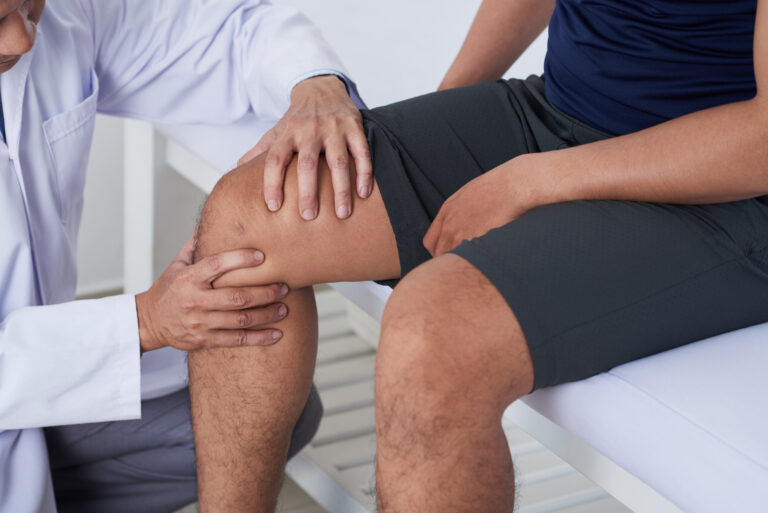
When you get a cut or bruise, your body gets to work fast. The skin begins to close within days, and within a few weeks, you can barely tell anything happened. But healing joint tissue, like tendons and cartilage, is a very different process. Understanding why can help you ask your doctor better questions and make more informed decisions about your care.
Why Joints Don’t Heal the Way Other Tissue Does
Most parts of your body heal well because blood can reach them. Blood delivers oxygen, nutrients, and specialized cells that do the actual repair work. For example, muscle strains usually heal within a few weeks because muscles have a rich blood supply that supports recovery.
Tendons don’t have that luxury. Research published in Frontiers in Physiology shows that tendons do not get much blood compared to tissues like skin and bone. Because of this low blood flow, tendons heal much more slowly after an injury.¹ Cartilage has even less blood flow than tendons, so when cartilage is damaged, the body’s natural repair process is slow, incomplete, or often times not enough on its own.
What Happens When a Tendon Is Injured
Tendons connect muscle to bone and absorb a lot of force. In high-use, weight-bearing joints like the shoulder, ankle, and knee, that adds up over time. Tendon injuries are more common than many people realize: roughly half of all muscle and joint (musculoskeletal) injuries involve a tendon.²
Small tendon injuries can often be managed with rest and physical therapy. But a partial or full tear, like a rotator cuff injury in the shoulder or an Achilles tear in the lower leg, usually requires more than that. A review in Bone & Joint explains that tendon damage often starts in areas with poor blood flow.3 These areas don’t heal well because they don’t get enough blood to support the healing process.
The Challenge with Cartilage
Cartilage is the smooth, cushioning tissue that lines the ends of your bones inside a joint. It absorbs shock and allows your bones to move against each other without friction. Once it wears down or tears, it rarely grows back on its own.
This is why cartilage damage is such a common source of persistent joint pain. There is no built-in repair system.
How Orthopedic Regenerative Medicine Fits In
Regenerative medicine is a type of healthcare that helps the body heal itself. Instead of only treating pain, it focuses on helping damaged tissue repair and recover.
For joints, this can mean using materials or devices that support healing at the injured area. Some of these treatments use hyaluronic acid (HA), a substance naturally found in the body, to help support the repair process.
What Hyaluronic Acid Does in the Body
HA is a substance your body already produces naturally. You’ll find it in your skin, your eyes, and throughout your joints and connective tissues. In your joints, HA plays an important role in keeping things lubricated so joints can bend and move smoothly. Think of it as part of your body’s built-in support system for joint function.
Because HA is already naturally present in the body, it is well suited for use in joint repair treatments. Devices built with HA work with what your body already knows.
Scaffolds That Support the Healing Process
Some regenerative treatments use a scaffold. A scaffold is a structure placed where the injury has occurred, such as a torn tendon. It gives the body something to grow new tissue on as it heals. These scaffolds are designed to be porous, with small spaces that allow the body’s own cells to move in and begin forming new tissue.
The Integrity implant is a tendon-repair scaffold made with HA. It is designed to protect the tendon as the body heals by releasing HA during the healing process. The scaffold is placed at the injury site, in this case on top of the torn tendon, to support the body’s natural healing process. For people with a rotator cuff tear or other tendon injury, it may be an option to discuss with your surgeon.
Hyalofast is a cartilage repair scaffold made with hyaluronic acid. It is designed to work with the body’s natural healing process to support cartilage regeneration. Clinical studies have shown it is safe for the body and has helped patients improve cartilage damage. Hyalofast is available in many countries outside the United States. If you have a cartilage injury, it may be an option to discuss with your surgeon.
*Hyalofast is available outside the U.S. only.
Talking to Your Doctor
If you have been told that rest and physical therapy alone may not be enough to treat your joint injury, it may be helpful to your doctor about other treatment options. Some of these options are designed to support the body’s natural healing process. The more you understand how healing works, the better prepared you will be to talk to your doctor about what may be right for you.
References
- Liu X, et al. The Role of Vascular Endothelial Growth Factor in Tendon Healing. Frontiers in Physiology. 2021;12:766080.
- Lee H, et al. Tendon Healing: A Review of Basic Science and Current Progress. Journal of Korean Foot and Ankle Society. 2020;33(4):227.
- Hohmann E, et al. Tendon healing: a concise review on cellular and molecular mechanisms with a particular focus on the Achilles tendon. Bone & Joint Open. 2022;3(8):656–664.