Few injuries strike more fear into athletes and active individuals than a torn tendon. In just a split second, everything can change, leaving you or your favorite athlete out of the game for nearly a year, especially when it comes to injuries like a ruptured Achilles tendon or a torn rotator cuff.
The recovery from a torn or ruptured tendon is often a long journey, and it’s no easy feat.
But what if the healing process could be enhanced? What if your surgeon could not only repair the tear but also create an environment that supports more complete healing?
That’s exactly what tendon augmentation with a biologic scaffold is designed to do. For patients experiencing pain and limited mobility due to a torn tendon whether in the shoulder, ankle, or other joints, advances in regenerative medicine are offering renewed hope for healing. With the help of an orthopedic surgeon or doctor of podiatric medicine (DPM), and innovative solutions like Anika’s Integrity Implant, many patients are successfully returning to the active lifestyles they love.
Understanding Tendon Injuries and Why They’re So Difficult to Heal
Tendons are the strong, fibrous bands of tissue that connect your muscles to your bones. They play a critical role in virtually any motion that involves movement, such as pushing, pulling, running, or jumping. When a tendon tears, whether from sudden stress, overuse, or age-related degeneration, the impact on your daily life can be significant.
Common tendon injuries include rotator cuff tears in the shoulder and Achilles tendon ruptures in the ankle. These injuries can disrupt your life and prevent you from enjoying the things you love, from recreational sports to simple tasks like reaching overhead or simply walking.
The challenge with these injuries is that tendons naturally have limited blood supply compared to other tissues in the body. This limited blood flow means healing can be slow and, in some cases, incomplete. Traditional surgical repair of a partial, fully torn, or ruptured tendon often requires surgery that reattaches the torn tendon to the bone with sutures and anchors. However, even with successful surgery, there’s always concern about the strength of the repair and the risk of re-tearing.
As Dana Walach, M.D. notes, “The less blood delivered, the longer it takes tissue to heal. Add to that the sheer size of the Achilles tendon, and you’re in for a lengthy recovery for athletes; these are usually season-ending injuries.”1
The same principles apply to rotator cuff tears and other tendon injuries throughout the body which brings us to tendon augmentation
What Is Tendon Augmentation?
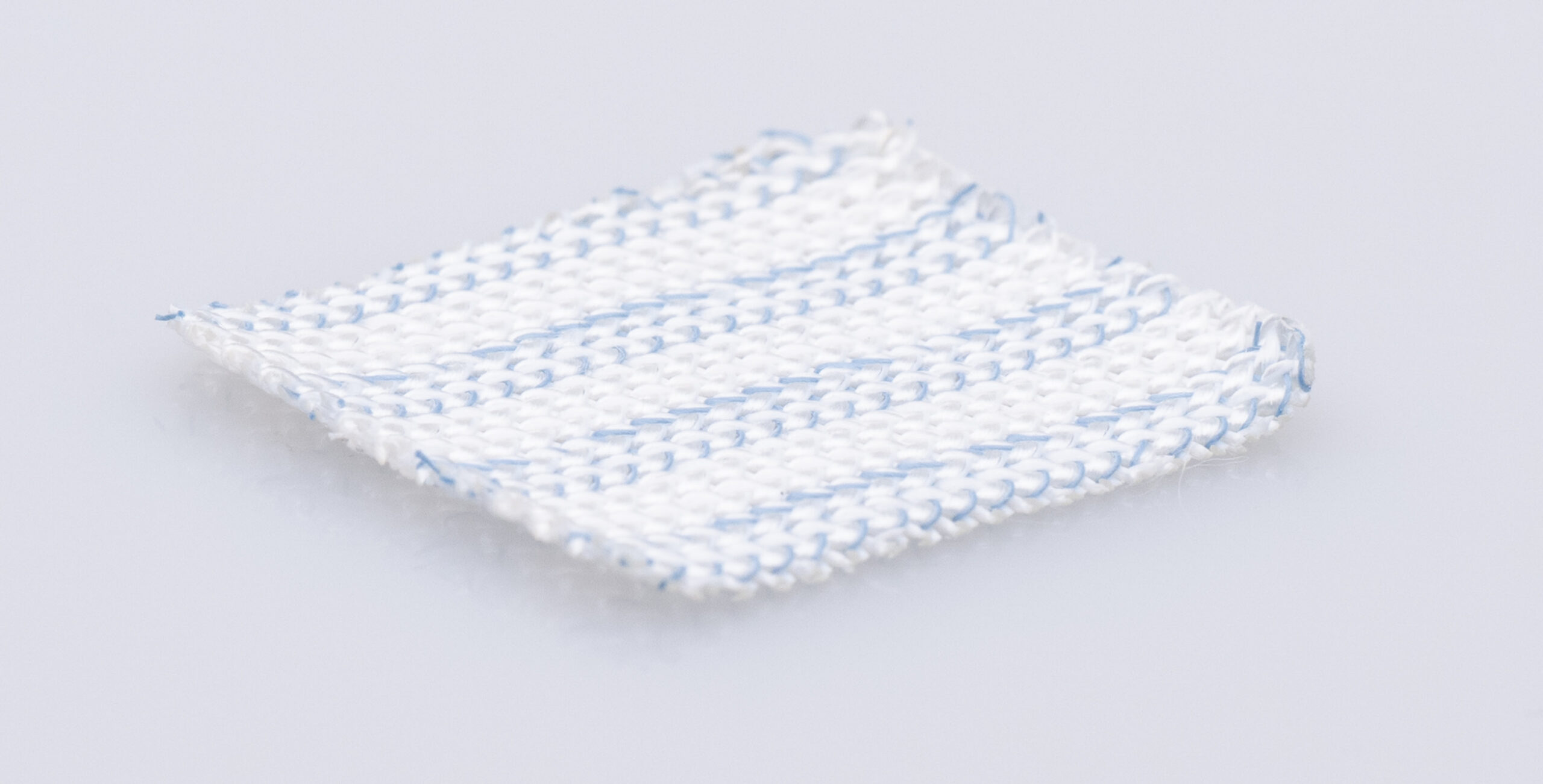
Tendon augmentation is an approach that goes beyond simply reattaching the torn tendon. When surgery is required to repair a torn tendon, your surgeon may choose to augment the tendon repair, meaning they will use something in addition to the sutures and anchors that secure the tendon back into place. For example, they may use Anika’s Integrity Implant, a biologic scaffold that is placed on top of the repair to create an optimized healing environment.
Think of augmentation as providing both protection for the injured tendon as well as a biologic environment that encourages healing. The scaffold serves as a framework that supports regenerative healing, in our case with hyaluronic acid, and can help thicken the tendon tissue during recovery.
The Integrity Implant: A Hyaluronic Acid-Based Scaffold Built for Natural Healing
Anika’s Integrity Implant represents a significant advancement in tendon repair augmentation. This biologic scaffold is specifically designed to support natural regenerative healing.
The Science Behind Integrity
The Integrity Implant is built on hyaluronic acid (HA), a natural substance found throughout the human body that is essential for proper joint and tissue function. Unlike some augmentation implants that use animal-derived materials, Integrity contains no animal-derived materials, reducing concerns about immune response or the use of animal by-products.
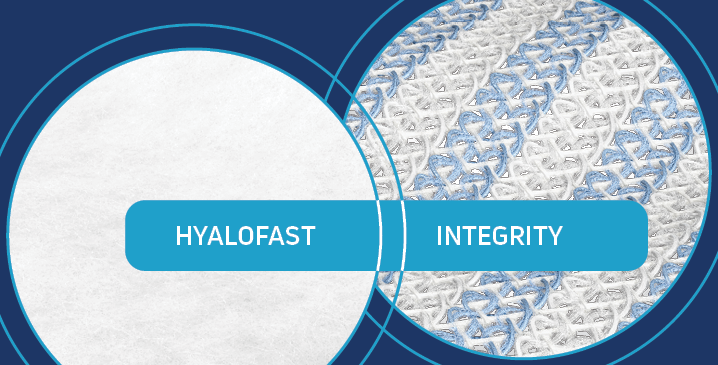
The scaffold is 80% Hyaff, Anika’s proprietary hyaluronic acid technology that resorbs into the repair over time. Hyaff is hyaluronic acid that is modified into a solid form. It is designed to last longer in the body, giving it more time to work within the repair and support critical functions throughout the healing process. Integrity promotes cellular infiltration , supports new blood vessel formation, and helps organize collagen deposition, all essential components of tendon healing.1
The Integrity scaffold is reinforced with 20% non-resorbable PET, a high-strength polymer commonly used in surgical sutures, that is safe and durable.
The result is a scaffold that does more than cover a torn Achilles tendon or rotator cuff tear; it supports the tendon repair process by creating an ideal healing environment and helping guide the injury toward a more complete recovery. The Hyaff component of the Integrity scaffold gradually resorbs and is replaced by structured collagenous tissue.1
Patient Benefits at a Glance
The Integrity Implant offers several key advantages for patients undergoing tendon repair:
- Augments tendon repair to enhance healing potential: Creates a biological environment that supports natural healing2
- Scaffold based on hyaluronic acid (HA): HA is a biocompatible, natural component of the human body
- No foreign animal-derived materials: Reduces concerns about immune response
- Designed to support regeneration of tendon tissue and increase tendon thickness: Helps build stronger, more resilient tissue3
- Helps patients return to an active lifestyle: Designed to support the complete recovery individuals want
Integrity is used in rotator cuff repair, Achilles repair, and other tendon repair surgeries, offering surgeons a versatile tool that can be used across multiple types of tendon injuries.
What to Expect: The Patient Journey with Augmented Tendon Repair
If you have a torn tendon and your orthopedic surgeon is suggesting surgery, understanding what to expect can help you feel more prepared and confident about your treatment.
Is Tendon Augmentation Right for You?
Augmentation isn’t recommended for every tendon repair. Your surgeon will consider several factors when deciding whether to use a biologic scaffold:
- The size and severity of your tear
- Your age, activity level, and overall health
- The quality of your tendon tissue
- Your goals for recovery and return to activity
- Risk factors that might complicate healing (such as chronic conditions, previous injuries, or structural issues)
The decision to augment is personalized to your specific situation. If your surgeon recommends Integrity, it’s because they believe the addition of Integrity will improve your chances of a successful recovery.
Life After Augmented Tendon Repair
Recovery from tendon repair surgery is a gradual process, like many other surgeries, which requires patience and commitment. While augmentation with Integrity is designed to enhance healing, the healing process still takes time.
After Surgery: Most patients go home the same day
Early Recovery: You’ll likely wear a brace or boot to protect the repair. Depending on which tendon was repaired, limited weight-bearing or arm movement may be necessary to prevent stress on the healing tendon. Follow your surgeon’s post-operative instructions carefully during this critical phase.
Rehabilitation: Physical therapy (PT) is essential for regaining strength, movement, flexibility, and function. Your therapist will guide you through progressive exercises designed to rebuild your tendon and surrounding muscles safely. This is where the benefits of augmentation often become apparent as many patients find they’re able to progress through PT with greater confidence in their repair.
Return to Activity: Everyone heals at a different pace. Your surgeon and physical therapist will work with you to determine when it’s safe to gradually increase your activity level. Most people return to daily activities in a few weeks, but full recovery can take several months depending on your injury and repair.
*Recovery timeline will vary based on the individual patient. Always follow your surgeon’s instructions. They will provide you with a detailed post-op care plan for best results.
Success Factors for Long-Term Recovery
While the Integrity implant provides protection and a biological environment that encourages healing, your commitment to the recovery process is equally important. Key factors for success include:
- Following post-operative instructions: Protecting the repair during early healing is critical
- Attending all physical therapy sessions: Consistent therapy rebuilds strength, motion and prevents stiffness
- Being patient with the timeline: Rushing back to activity too soon increases re-injury risk
- Communicating with your care team: Report any concerns or setbacks promptly
- Maintaining overall health: Good nutrition, avoiding smoking, and managing chronic conditions all support healing
Making the Decision: Talking with Your Surgeon
If you’re living with pain and limited mobility from a tendon injury, it’s time to have a conversation with your surgeon about your options.
Questions to Ask Your Surgeon
Prepare for your consultation by asking:
- “Am I a candidate for tendon augmentation with a biologic scaffold?”
- “What are my options for augmentation materials?”
- “What outcomes have you seen with the Integrity Implant?”
- “What will my recovery look like, and when can I expect to return to normal activities?”
- “What are the risks and benefits of augmentation versus repair alone?”
- “How many of these procedures have you performed?”
Your surgeon should be able to explain why they recommend a particular approach and what you can realistically expect from surgery and rehabilitation.
Enhanced Healing for Active Lives
Tendon injuries don’t have to mean the end of your active lifestyle. With advances in regenerative medicine including biologic scaffolds like the Integrity Implant, surgeons now have powerful tools to support enhanced healing for a strong recovery.
Whether you’re an athlete looking to return to your sport, a weekend warrior who wants to get back on the tennis or pickleball court, or someone who simply wants to walk, reach, and move without pain, tendon augmentation with Integrity offers hope for a more complete recovery.
The combination of advanced surgical techniques and biologic augmentation is changing what’s possible in tendon repair. By protecting the tendon and supporting the biological healing process, Integrity helps create the conditions for tendons to heal more completely.
If you’re facing tendon surgery, ask your surgeon about the Integrity Implant or contact us for more information.
For complete product information, including indications, contraindications, warnings, and precautions, please refer to the Instructions for Use.
References
- Data on file, Anika Therapeutics, Inc.
- Polizzi, A., et al. Impact of Hyaluronic Acid and Other Re-Epithelializing Agents in Periodontal Regeneration: A Molecular Perspective. Int. J. Mol. Sci. 2024, 25, 12347. https://doi.org/10.3390/ijms252212347