Are you living with chronic pain, stiffness, and limited function because of a cartilage injury in your knee? You’re not alone. Cartilage damage is a common problem that can significantly impact your quality of life, whether it’s from a sports injury, degenerative changes, or an accident. The frustrating reality is that cartilage doesn’t heal well on its own. Unlike other tissues in your body that can repair themselves naturally, damaged cartilage often needs intervention to regenerate properly. That’s where regenerative medicine solutions like Hyalofast come in, offering a different approach to cartilage repair that works with your body’s natural healing processes.
What is Hyalofast?
Hyalofast is a scaffold designed to help your body repair damaged cartilage in your knee. It can treat injuries that affect just the cartilage surface or deeper damage that extends into the bone underneath.1
What makes it work? Hyalofast is made from hyaluronic acid, a naturally occurring substance already found in your joints and cartilage. It’s derived from natural sources and doesn’t contain any animal materials, making it safe for patients.2 You can think of it as a framework that gives your body the support it needs to rebuild healthy cartilage where it’s been damaged.
What does Hyalofast actually look and feel like?
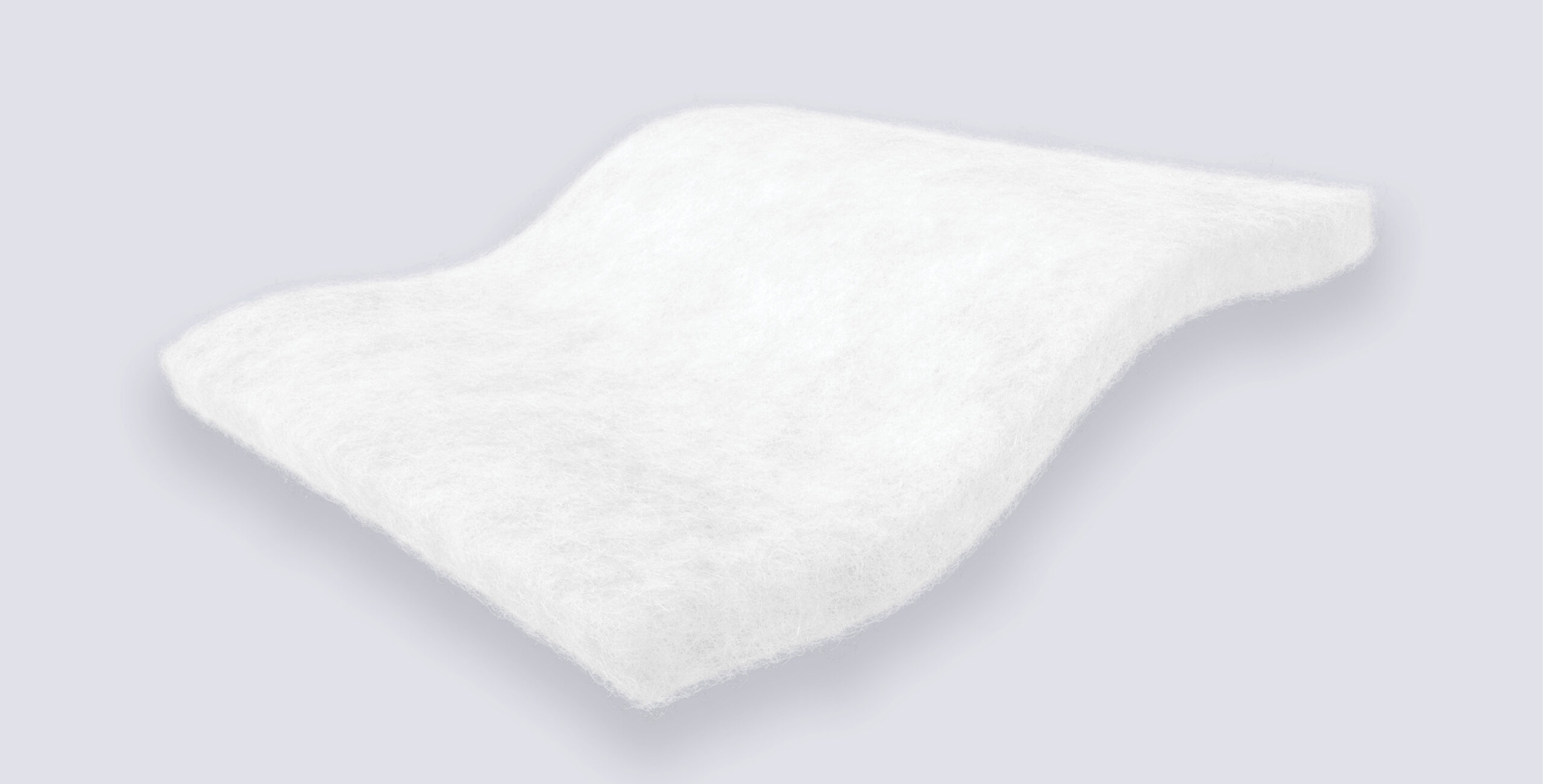
Although the term “scaffold” may sound mechanical, Hyalofast doesn’t look like a rigid structure at all. Instead, it resembles a thin, soft, non‑woven pad; almost like a small, flexible piece of felt.
It’s made from delicate hyaluronan-based fibers that give it a light, fluffy, fabric‑like texture. Surgeons describe it as very easy to handle because it naturally conforms to the shape of the cartilage defect.
Hyalofast is available in two small sizes:
- 2 × 2 cm, about the size of a postage stamp
- 5 × 5 cm, closer to a small sticky‑note square
Its soft, pliable nature means it doesn’t usually need stitches or fixation devices to secure in place. It often stays in place on its own while your injury begins healing.
How Hyalofast Supports Your Body’s Natural Healing
Hyalofast helps your body heal in two important ways.
Provides a Foundation for New Tissue
First, the scaffold provides a three-dimensional structure that helps your body’s repair cells attach and grow new cartilage. These repair cells, called mesenchymal stem cells, are naturally present in your body and play a key role in healing damaged tissues. The Hyalofast scaffold gives them a place to settle in and start building new cartilage.3
Creates the Right Environment for Healing
Second, as the scaffold gradually breaks down over time, it creates an environment rich in hyaluronic acid that encourages your stem cells to develop into healthy cartilage tissue. The scaffold is designed to be absorbed by your body over about six months as your new cartilage grows in its place.4,5
The Treatment Process: What to Expect
If you and your doctor decide Hyalofast is right for your situation, here’s what you can generally expect.
One of the main advantages is that Hyalofast is a single-stage procedure. This means your surgeon can complete the treatment in one operation rather than multiple surgeries as may be required by other products. The procedure can be done arthroscopically (through small incisions using a camera) or through a slightly larger incision, depending on your specific injury. Either way, it’s considered minimally invasive compared to more extensive surgical options.
During the procedure, your surgeon will prepare the damaged cartilage and then manipulate the Hyalofast scaffold so it fits the defect perfectly. The scaffold is often trimmed and customized to match the size and shape of your injury. To help support the healing process, the scaffold is usually combined with a small amount of your own bone marrow, which contains important repair cells.
This bone marrow can be collected in one of two ways: either as a small sample taken from your hip bone during the same surgery, or by gently stimulating the bone right under the cartilage injury. In the second method, tiny perforations are made in the bone so that your natural repair cells can flow up into the injury area and help the Hyalofast scaffold do its job.
Recovery time varies based on the size and location of your injury and your overall health. Your surgeon will work with you on a rehabilitation plan to help you heal properly and return to your normal activities safely.
What the Research Shows
Clinical research on Hyalofast has shown promising results. Studies using advanced imaging and tissue analysis have confirmed that patients develop durable cartilage that closely resembles natural, healthy cartilage.6,7,8,9,10 This matters because cartilage quality affects how well your knee will function over time.
The long-term data is particularly encouraging. Research tracking patients for an average of 14 years shows significant, lasting improvements in both pain levels and knee function.11 For many people, this means getting back to the activities they enjoy with less pain and better mobility.
Is Hyalofast Right for You?
Every cartilage injury is different and treatment needs to be tailored to your specific situation. Hyalofast may be worth discussing with your doctor if you have a cartilage defect in your knee that hasn’t improved with other treatments or if you’re interested in exploring options that support your body’s natural healing.
The best way to know if Hyalofast is appropriate for you is to have a thorough conversation with your orthopedic surgeon. They can evaluate your injury, discuss your goals, and help you understand what to expect based on your individual circumstances.
Moving Forward
Living with a cartilage injury can be challenging, especially when it keeps you from doing the things you love. Regenerative approaches like Hyalofast work with your body’s natural ability to heal, providing both the structure and the biological environment needed for new cartilage to grow.
With its single-stage procedure, minimally invasive approach, and long-term evidence of improved pain and function, Hyalofast represents a clinically proven solution in the evolving field of cartilage repair. If you’re exploring treatments for your cartilage injury, talk to your doctor about whether Hyalofast might be right for your situation.
References
- Hyalofast Instructions for Use.
- Pasquinelli G, Orrico C, Foroni L, et al. Mesenchymal stem cell interaction with a non-woven hyaluronan-based scaffold suitable for tissue repair. J Anat. 2008 Nov;213(5):520-30.
- Cavallo C, Desando G, Columbaro M, et al. Chondrogenic differentiation of bone marrow concentrate grown onto a hyaluronan scaffold: Rationale for its use in the treatment of cartilage lesions. J Biomed Mater Res A. 2013 Jun;101(6):1559-70
- Facchini A, Lisignoli G, Cristino S, et al. Human chondrocytes and mesenchymal stem cells grown onto engineered scaffold. Biorheology 2006;43(3-4):471-80.
- Lee YHD, Suzer F, Thermann H. Autologous Matrix-Induced Chondrogenesis in the Knee: A Review. Cartilage. 2014;5(3):145-153.
- Buda R, et al. Osteochondral lesions of the knee: a new one-step repair technique with bone-marrow-derived cells. J Bone Joint Surg Am. 2010 Dec;92 Suppl 2:2-11.
- Buda R, et al. One-step arthroscopic technique for the treatment of osteochondral lesions of the knee with bone-marrow-derived cells: three years results. 2013 Aug;97(2):145-51.
- Vannini F, et al. One Step Treatment of Juvenile Osteochondritis Dissecans in the Knee: clinical results and T2 mapping Characterization. Orthop Clin North Am. 2012 Apr;43(2):237-44, Epub 2012 Mar 14.
- Gobbi A, et al. Matrix-Induced Autologous Chondrocyte Implantation versus Multipotent Stem Cells for the treatment of large patellofemoral chondral lesions: a non randomized prospective trial. Cartilage. 2015 Apr;6(2):82-97.
- Gobbi A, et al. One-step surgery with multipotent stem cells and Hyaluronan-based scaffold for the treatment of full-thickness chondral defects of the knee in patients older than 45 years. Knee Surg Sports Traumatol Arthrosc, 2018 Jul; 26(7):2217.
- Whyte GP, Bizzoco L, Gobbi A. One-Step Cartilage Repair of Full-Thickness Knee Chondral Lesions Using a Hyaluronic Acid-Based Scaffold Embedded With Bone Marrow Aspirate Concentrate: Long-term Outcomes After Mean Follow-up Duration of 14 Years. Am J Sports Med. 2024 Dec;52(14):3561-3568.
Important Information
Hyalofast is not approved for use in the United States.
Anika products may not be available in all geographies. Product availability is subject to the regulatory clearances in individual markets. Please reach out to your local representative or Contact Us if you have questions about specific market approvals.
For complete product information, including indications, contraindications, warnings, and precautions, please refer to the Instructions for Use provided with the product or Contact Us for a copy.