Summer tends to make things feel a little easier. The longer days inspire you to move a bit more, and fresh, in-season foods make healthier choices feel genuinely enjoyable. It’s a gentle window to build habits your joints, and your overall well-being, will appreciate.
You don’t need to change everything at once though. Small, thoughtful choices, practiced consistently, can go a long way. Here’s a simple place to begin.
Moving More Without Making Your Joints Pay for It
Not all movements are equal, especially when your joints are part of the conversation. Low-impact activities let you stay active, with less stress on your joints compared to running or jumping. The Arthritis Foundation puts low-impact aerobic activity at the center of managing joint health for a reason.1 It works. And summer gives you more ways to do it than at almost any other time of year.
Check out the below options for some ideas!
Swimming
Heat and humidity can worsen joint stiffness and discomfort, but water and swimming address both at once. 2 The buoyancy reduces the load on your knees, hips, and ankles, the temperature keeps you cool, and the resistance still delivers a real workout.
If swimming seems overwhelming to you, you’re in luck: Water walking and water aerobics count too. Movement is the goal.
Motivation Tip: Most community pools run water aerobics classes that are free or inexpensive with membership. The group setting makes it easier to show up consistently, and you’ll probably enjoy it more than you expect.

Cycling
Cycling is a low-impact activity that might surprise you by how much it does. Your body is supported, the motion is smooth, and there is no jarring impact. But your legs and hips are working, and stronger muscles around those joints means less load on the joint itself.3 That’s a trade worth making.
Road bike, mountain bike, cruiser, or a stationary bike: the format doesn’t matter much. If you’re just getting started, ride on a flat road and keep the ride short. Make sure to have the proper seat height and position before starting too. Then build from there. Your knees will thank you.
Gentle Yoga
If you’ve ever woken up and spent the first ten minutes just trying to get your joints to cooperate, gentle yoga is for you. Slow movement and stretching in the morning helps loosen up joints that tighten overnight.4 You don’t need a studio, a mat, or 45 minutes. Ten to fifteen minutes on the porch or sidewalk before your day starts is enough to make a difference.
Summer mornings are a perfect time for yoga, because being outside helps it feel less like something you have to do and more like something you genuinely enjoy choosing.
Motivation Tip: Morning stiffness is a signal, not a stop sign. Gentle movement is usually the fastest way through it. Start slow, let the body warm up, and don’t push range of motion before you’re ready.

Tai Chi
The slow, controlled movements of Tai Chi build lower body strength and, maybe more importantly, balance.5 For anyone dealing with joint pain or coming back from a joint procedure, balance and fall prevention are very important. Tai chi covers both with almost zero joint stress in the process.
Parks and community centers often run free outdoor sessions in summer. It’s worth trying once before writing it off. Most people are surprised by how much they like it.
Paddleboarding and Kayaking
These two activities work your body quite differently. Paddleboarding is a full-body workout where your core is constantly engaged for balance, but your legs, back, and arms are all working too. Kayaking skews more toward the upper body, with your arms, shoulders, and back doing most of the pulling. Both, however, give your core a solid workout, while giving your joints an easier workout.
A stronger core also helps take pressure off your lower back and hips, two places where joint discomfort tends to show up. Being on the water makes the whole thing feel less like exercise and more like a summer afternoon, which is part of why people keep doing it.
Rentals are available at most lakes and beaches. You don’t need to own anything to try it.
Now, switching gears from activities to nutrition…
What You’re Eating Matters More Than You Might Think
Did you know the type of food you eat impacts joint health? Some nutrients help reduce inflammation in the body and give your joints what they need to stay healthy over time.7 You don’t need a complicated diet to get there. Summer makes it easier because the best foods for your joints are in season right now.
Omega-3s
Omega-3 fatty acids are one of the most studied nutrients for reducing inflammation in the body.8 Salmon, mackerel, sardines, and tuna are your best sources. Aim for two or three servings of fatty fish per week if you can. Not a fish person? Walnuts, chia seeds, and flaxseed are a great plant-based alternative to fish. .
Berries
Blueberries, blackberries, and tart cherries rank highest in anthocyanins, the antioxidants that give them their deep color, followed by strawberries and raspberries.10 Anthocyanins help protect joint tissue from the kind of oxidative stress that builds up and contributes to cartilage breakdown over time.
Tart cherry juice may help too! The Arthritis Foundation has highlighted it as one of the more promising food sources for joint comfort, with research suggesting it may help reduce inflammatory markers.9 A small glass a few times a week is an easy addition. Add some ice and make it a real treat!
Motivation Tip: Add berries to something you already eat every morning. Yogurt, oatmeal, eggs on the side…it doesn’t matter. A habit that attaches to something you’re already doing is more likely to stick.
Leafy Greens
When you think of leafy greens, you might think of vitamin C, but did you know that they are also full of vitamin K? Adequate vitamin K is tied to better bone density and may help support cartilage health, both of which show up in how your joints feel over time.11 Spinach, kale, Swiss chard, and arugula provide essential vitamins and nutrients. The vitamin C in those same greens also helps your body produce collagen, which is a key part of healthy cartilage.
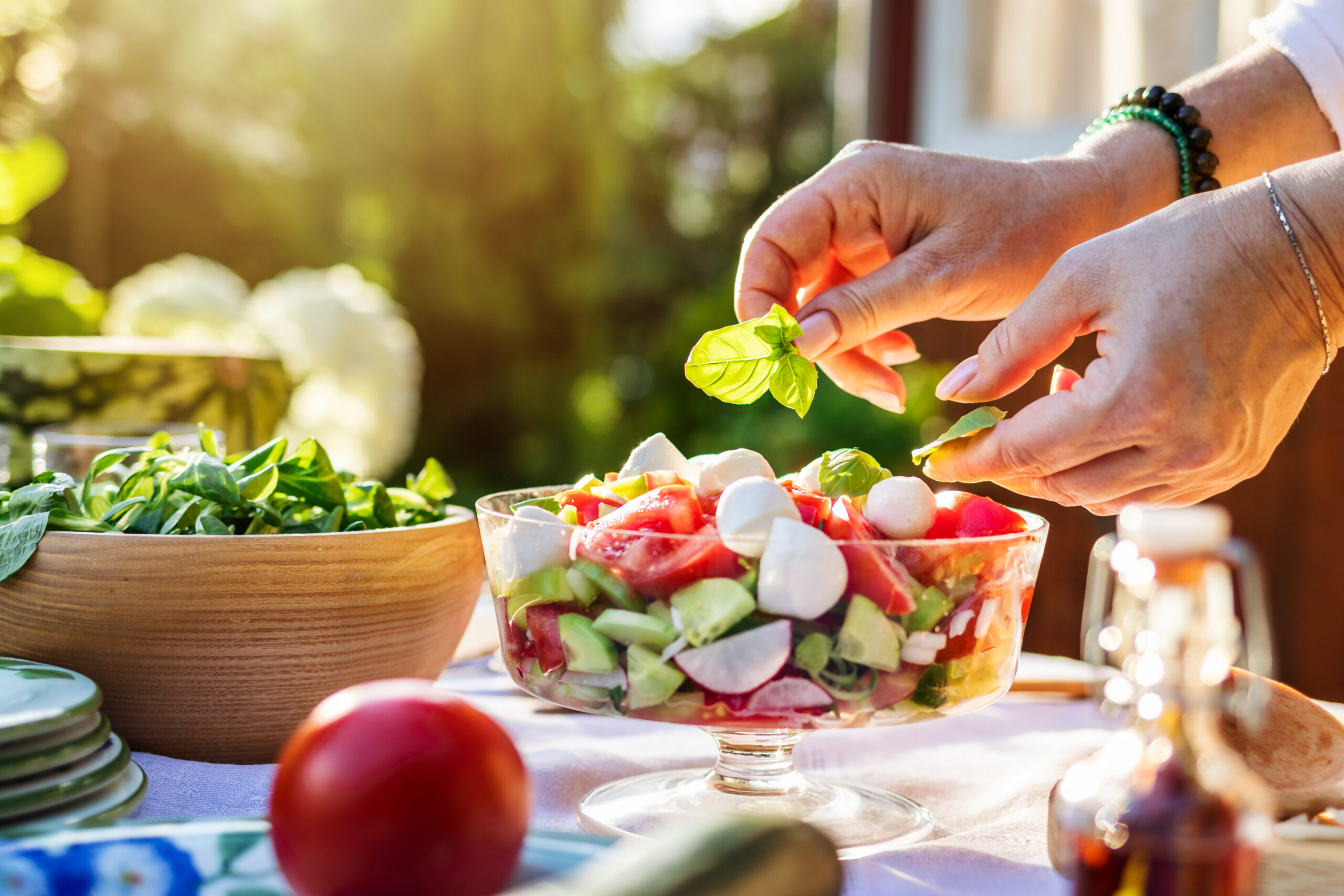
A salad with dark greens, fresh berries, walnuts, and grilled salmon checks most of these boxes in one bowl – plus it’s a delicious summer meal anyway!
Collagen-Supporting Nutrients
Bone broth is one of the more talked-about ways to add collagen to your diet, but a hot bowl may not sound appealing in August. For a summer approach, you can focus on foods that help build your own collagen: vitamin C from citrus and bell peppers, zinc from pumpkin seeds and lean meat, and copper from legumes and shellfish.12
Collagen supplements have also had a lot of attention lately, and some research suggests they may support joint comfort when taken consistently over time. It is worth asking your doctor about if you’re curious.
The Cookout Foods Worth Watching
Cookouts are a great way to spend time outside with friends or family, but the food you choose may impact your inflammation. Processed hot dogs and sausages, packaged chips, sugary sodas, and condiments loaded with refined sugar can all contribute to inflammation in the body.
You don’t have to skip the barbecue, just tilt your plate for a better balance. Grilled chicken over processed meats, sparkling water over soda, more vegetables and fruit. Small shifts can add up over the summer.
Motivation Tip: Bring something to the cookout. A fruit salad with blueberries and watermelon, or a simple leafy green side, means there’s at least one joint-friendly option on the table without making it a whole thing.
Pick One Thing and Try It This Week
Joint health isn’t built on one big decision. It’s a series of smaller ones like:
- Which activity you will try this weekend
- Which food you will add to your diet
- Whether you take ten minutes for a stretch before the day starts
Summer gives you a real opening to build habits that carry into fall and beyond.
Pick one thing from this list, whether it’s a morning stretch, a bag of blueberries, or a Saturday bike ride or swim. Try adding it one day a week, then two days. Done consistently, they add up more than you may expect; plus, going slowly helps create a habit that turns into a routine.
If joint pain has been limiting you, or if you’ve had a recent procedure, check with your doctor or physical therapist before starting any activity. They can help you figure out what makes sense for your specific situation. Then get moving. Your joints will be glad you did.
References
- Arthritis Foundation. Best exercises for arthritis. https://www.arthritis.org/health-wellness/healthy-living/physical-activity/getting-started/best-exercises-for-arthritis
- Arthritis Foundation. Swimming and water exercise. https://www.arthritis.org/health-wellness/healthy-living/physical-activity/getting-started/best-exercises-for-arthritis
- Arthritis Foundation. Biking for arthritis. https://www.arthritis.org/health-wellness/healthy-living/physical-activity/getting-started/biking-for-arthritis
- Mayo Clinic. Exercising with arthritis: Improve your joint flexibility and strength. https://www.mayoclinic.org/diseases-conditions/arthritis/in-depth/arthritis/art-20047971
- NIH National Institute on Aging. Tai chi for older adults. https://www.nia.nih.gov/health/exercise-physical-activity/tai-chi-older-adults
- Harvard Health Publishing. The real-world benefits of strengthening your core. https://www.health.harvard.edu/healthbeat/the-real-world-benefits-of-strengthening-your-core
- Arthritis Foundation. Best foods for arthritis. https://www.arthritis.org/health-wellness/healthy-living/nutrition/anti-inflammatory/best-foods-for-arthritis
- NIH Office of Dietary Supplements. Omega-3 fatty acids fact sheet for consumers. https://ods.od.nih.gov/factsheets/Omega3FattyAcids-Consumer/
- Arthritis Foundation. Best fruits for arthritis. https://www.arthritis.org/health-wellness/healthy-living/nutrition/anti-inflammatory/best-fruits-for-arthritis
- Harvard T.H. Chan School of Public Health. Antioxidants. https://www.hsph.harvard.edu/nutritionsource/antioxidants/
- Harvard Health Publishing. Vitamin K and bone health. https://www.health.harvard.edu/staying-healthy/vitamin-k-and-bone-health
- NIH Office of Dietary Supplements. Vitamin C fact sheet for consumers. https://ods.od.nih.gov/factsheets/VitaminC-Consumer/
- Arthritis Foundation. Inflammatory foods. https://www.arthritis.org/health-wellness/healthy-living/nutrition/anti-inflammatory/best-foods-for-arthritis