
You just found out you have a stress fracture below the surface of your bone. These stress fractures can also be called insufficiency fractures, bone voids or bone marrow lesions. In this blog, we’ll refer to them as insufficiency fractures.
Perhaps the pain had been building for a while, but there was no fall, no accident, or no single moment that started it. That can feel unsettling and make you wonder what it actually means, how serious it is, and what happens next.
The good news is that these injuries are well understood, and there are clear treatment paths depending on how your body is responding to healing. This article walks through what these injuries are, why they happen, and how a treatment called Tactoset may fit into your care plan.

So, What Actually Happened?
Bone isn’t solid all the way through. The outer layer is hard and dense, but the inside has a more spongy structure. That inner layer is where insufficiency fractures can form.
An insufficiency fracture is a small crack in the inside of the bone (spongy layer).
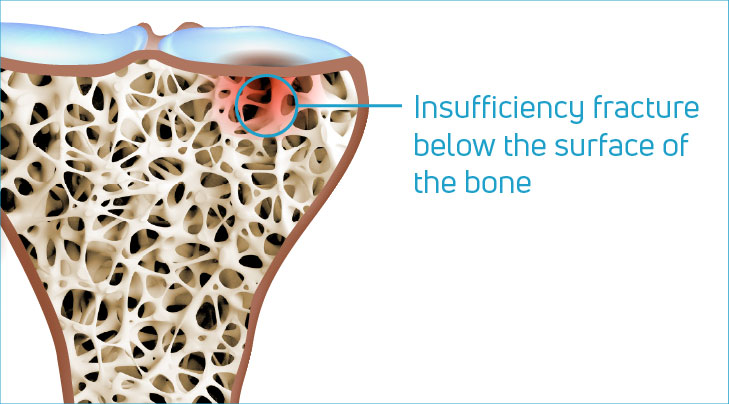
Unlike a regular broken bone, these injuries don’t typically come from a single fall or accident. They build up gradually from repeated everyday stress on the bone making it become weaker over time. Walking, standing, routine physical activity, things that normally wouldn’t cause a problem, can be enough to create a crack when the bone isn’t at full strength.
A few things may lead to your bone weakening:
- Osteoarthritis (OA), which breaks down the cartilage cushioning the joint. Once that cushion is gone, the bone absorbs more impact.
- Low bone density or osteoporosis
- High-repetition activities, particularly in weight-bearing joints like the knee, ankle, or foot1
An insufficiency fracture is closely related. It’s almost like a bruise or stress signal inside the bone that makes the area inflamed and irritated. It often shows up alongside or before a fracture fully develops and in many cases, an insufficiency fracture is an early warning sign that the bone is under more stress than it can comfortably handle.
Why Did It Take So Long to Find?
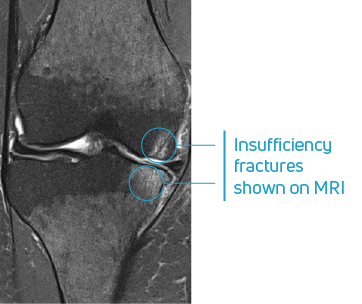
This is one of the most common frustrations patients have. The answer is straightforward: X-rays don’t show these injuries. The cracks form in the inner layer of the bone, not on the surface, so a standard X-ray will look normal.
An MRI (Magnetic Resonance Imaging) scan will show the injury. On the right type of MRI, an insufficiency fracture shows up as a hazy bright area near the joint. That finding is what changes the whole conversation about treatment.
If you went months without an answer, that’s not unusual. It’s also not because the pain wasn’t real. It just takes the right imaging to see what’s there.
What Happens Now?
Many insufficiency fractures, particularly in younger patients, heal on their own with rest, activity modification, and time. Your doctor may recommend reducing weight on the affected area for a period, along with physical therapy to rebuild strength safely.
The ones that don’t respond to conservative treatment after about three months are considered chronic. When insufficiency fractures go untreated, they’ve been linked to further cartilage damage and a higher likelihood of eventually needing a joint replacement.
If your fracture falls into that category, your doctor may discuss a procedure as the next step. That’s where Tactoset comes in.
What is Tactoset?
Doctors use Tactoset to support the weakened or damaged bone from an insufficiency fracture and to mimic the properties of good quality bone.
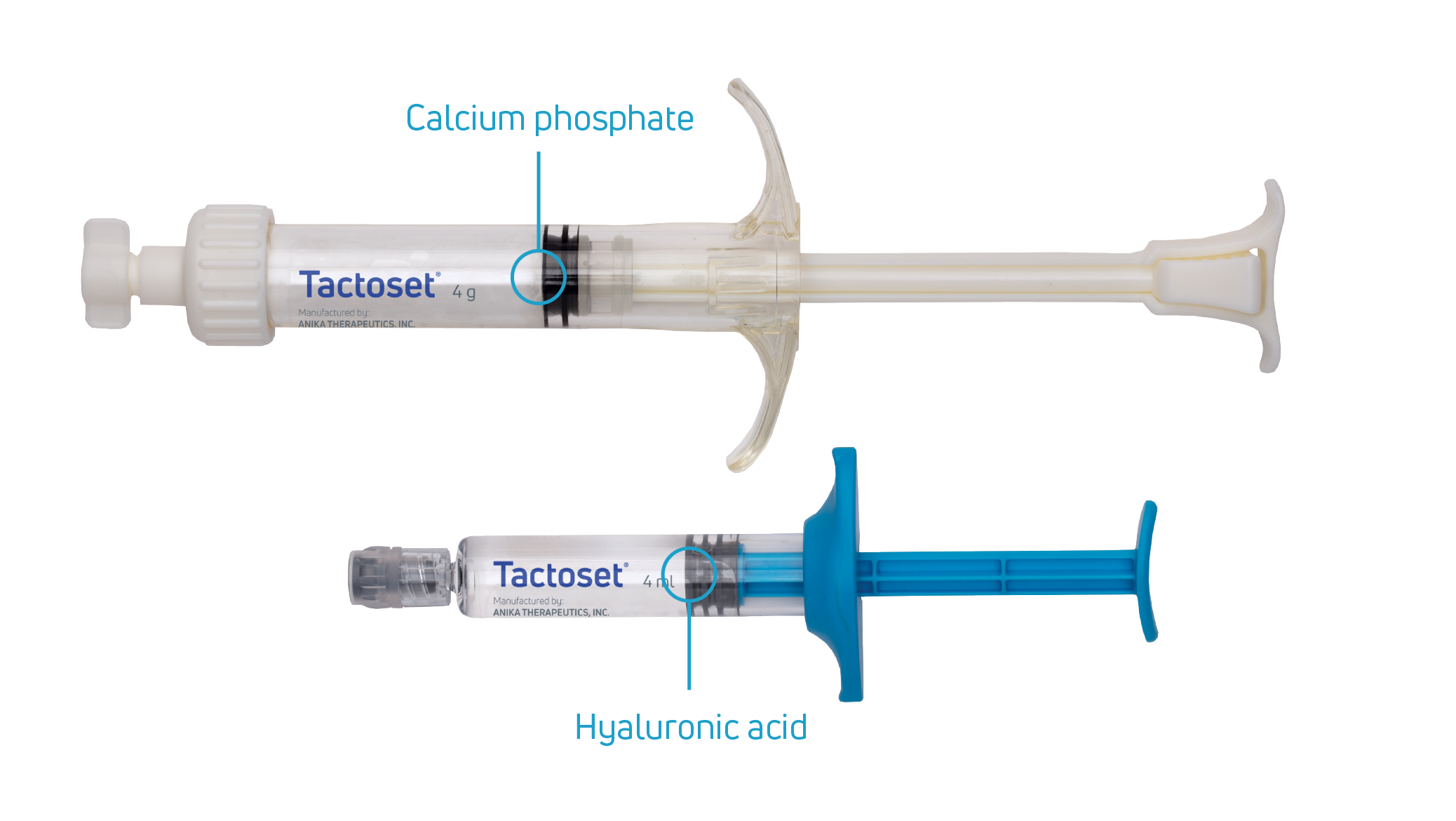
Tactoset is made of calcium phosphate and hyaluronic acid (HA).
- Calcium phosphate is a material that hardens into the same mineral found in your natural bone (hydroxyapatite) at body temperature, and supports the growth of new bone
- Hyaluronic acid (HA) is something your body already produces. HA is found throughout your body and helps your joints move fluidly, keeps skin hydrated, and supports connective tissue.
Tactoset is injected into the insufficiency fracture in the bone where it hardens. Once hard, it fills the fracture and reinforces the weakened area of bone.
It doesn’t stay there permanently. Over time, Tactoset is resorbed and replaced by the growth of new bone during the healing process.2
The Hyaluronic Acid Difference
Tactoset contains hyaluronic acid, which is something your body naturally makes. It isn’t a foreign substance.
Hyaluronic acid helps Tactoset flow more smoothly when it’s injected into the bone. That means it can move through the tiny spaces inside your bone and fill in the weak area more completely.
It also gives the surgeon helpful feedback during the procedure. When the space fills up, they can feel a change in resistance, which helps confirm the bone defect (crack) is filled.
Other bone fillers don’t include hyaluronic acid. That’s a meaningful difference in how the material flows and fills during injection.
What to Expect from the Bone Void Filling Procedure
Tactoset is delivered through minimally invasive, or “keyhole” surgery. No large incisions. The surgeon uses live imaging to confirm exactly where the material needs to go, then advances a thin tube to the location and injects Tactoset in. It sets in roughly ten minutes at body temperature.
Most patients go home the same day, but recovery looks different depending on the joint involved and what else was addressed during surgery. You may need to limit the weight you put on your injury for a short time. Most surgeons will also recommend physical therapy.
Before the procedure, your surgeon will go over the full procedure and recovery plan so you feel comfortable.
Talking to Your Doctor
Discuss Tactoset with your doctor if:
- You have persistent bone pain that started without a clear injury and hasn’t improved with rest or conservative treatment
- An MRI has shown a bone marrow lesion or insufficiency fracture
- Every case is different. Surgical procedures carry real risks and results vary. What matters most is getting the right information in front of your doctor and asking the questions that help you understand your options.
References
- Yoshida S, Imagama T, et al. Osteoporosis, Osteoarthritis, and Subchondral Insufficiency Fracture: Recent Insights. Biomedicines. 2024;12(4):843. doi:10.3390/biomedicines12040843. PMID: 38672197.
- Data on file, Anika Therapeutics, Inc.