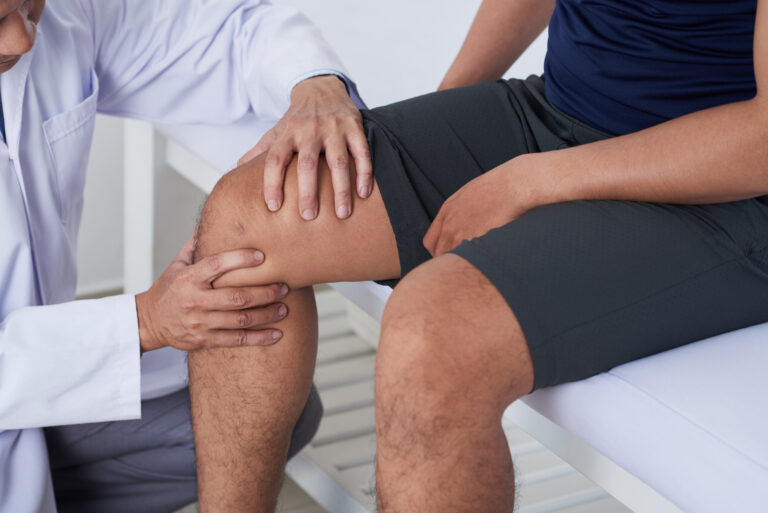
Most people picture the operating room when they think about tendon surgery. The stitches, the screws, the surgeon’s hands. That part matters.
But the real test of a tendon repair comes later. It comes when you lift a bag of groceries, or reach for something on a high shelf, or push off to climb a flight of stairs.
What your tendon becomes while it heals has a lot to do with whether the repair holds up.
What Healthy Tendon Tissue Looks Like
Tendons connect your muscles to your bones. Every time you walk, lift, or reach overhead, a tendon is carrying that load.
A healthy tendon is dense and neatly organized. Picture the strands inside a rope, all running the same direction and pulling together. That arrangement is what lets a tendon handle force without giving out.
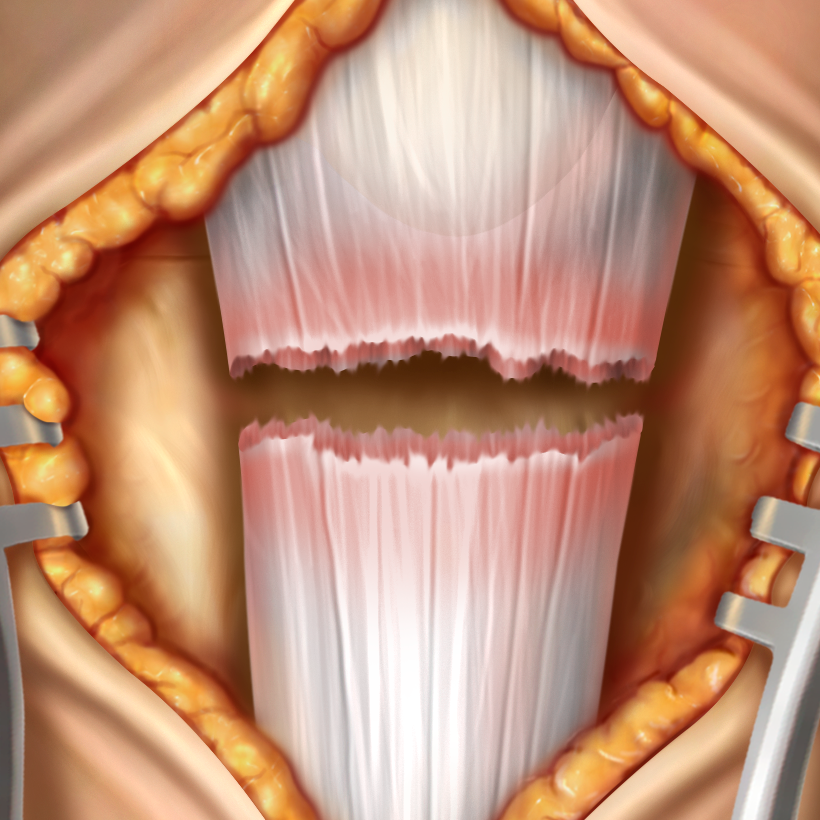
An injured tendon looks different. It gets thinner and more frayed, and the fibers lose that neat alignment. Tendons also have a limited blood supply compared with muscle, which is part of why they can be slow to heal.1
Why Thickness and Quality Affect a Repair
When a torn tendon heals, your body doesn’t rebuild it the way it was. It fills the gap with scar tissue. Scar tissue does a job, but it isn’t as organized or as strong as the tendon you started with. Researchers point to that disorganized tissue as a main reason some repairs don’t hold.2
Thickness works the same way. A thicker, better organized tendon spreads everyday load across more tissue. Thin, weakened tissue has less to work with.
This is also why surgeons look closely at tissue quality before they operate. Tendon quality is one of several things that affect how a repair heals over time. Your age matters. So does the size of the tear, whether you smoke, and how closely you stick to your rehab plan.3
Some of those you can’t change. Some you can.
Where Regenerative Approaches Come In
Orthopedic regenerative medicine is a field of care focused on helping the body repair its own tissue. The goal is to treat the damage, not just ease the symptoms. In orthopedics, that often means giving the body a better opportunity to heal.
One material used in this work is hyaluronic acid (HA). Your body already makes it. HA is in your skin, where it holds moisture, and in your joints, where it helps the surfaces glide so you can bend and move smoothly. Because HA is already part of you, materials built from it are compatible with your body.
Where the Integrity Implant Fits
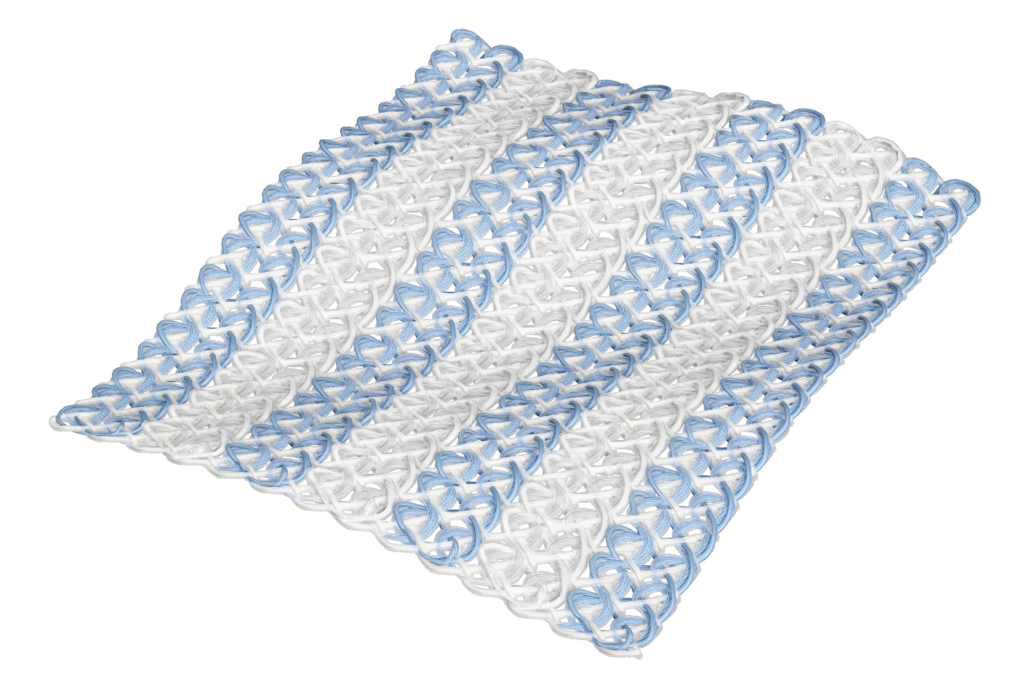
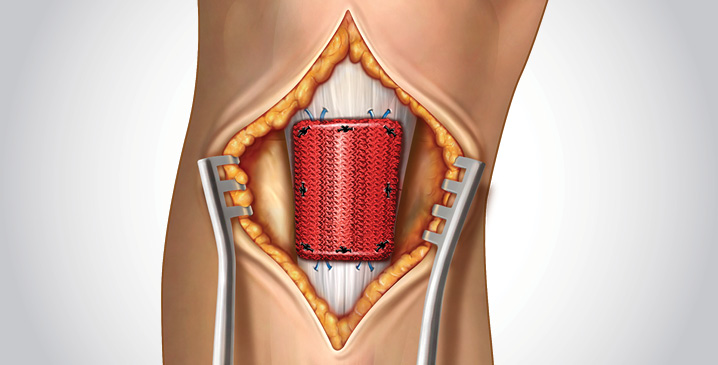
The Integrity implant is a small scaffold made from hyaluronic acid. A surgeon can place it right at the site of a tendon tear. That includes rotator cuff and Achilles tendon repairs.
It isn’t a solid patch. Integrity has a woven design that leaves space for the body’s own healing cells to move in and rebuild tendon tissue at the repair site. It’s reinforced with medical-grade polyester, providing strength and handling characteristics that help the surgeon position and secure it at the repair site. Integrity is partially resorbable. The hyaluronic acid part of it absorbs into your body over time to encourage healing.
The idea behind it is simple enough. Support your body’s natural healing process in the spot where the healing needs to happen.
A Note on Other Materials You May Hear About
Surgeons have more than one way to augment a tendon repair. The words for these materials can be confusing at first.
- An allograft is tissue donated by another person. It’s cleaned and prepared for surgical use.
- A xenograft is made from animal tissue, often from a cow, and prepared in much the same way.
- Integrity is neither. It’s made from a form of hyaluronic acid, woven together with medical grade polyester.
None of this means one option is right for everyone. It’s just worth knowing what your surgeon means when the talk turns to materials.
Talking With Your Surgeon
If a tendon repair is ahead for you, ask what your surgeon saw on your scans. Ask about the quality and condition of your tissue, not just the size of the tear. Ask what recovery will look like, week by week.
You’re the one who lives with the result, so it’s important to understand your options and what to expect before moving forward.
References
1. Tempfer H, Traweger A. Tendon Vasculature in Health and Disease. Frontiers in Physiology. 2015;6:330. https://www.ncbi.nlm.nih.gov/pmc/articles/PMC4650849/
2. Bone marrow stimulation in arthroscopic rotator cuff repair is a cost-effective and straightforward technique to reduce retear rates: a systematic review and meta-analysis. Frontiers in Surgery. 2023. https://www.ncbi.nlm.nih.gov/pmc/articles/PMC9989271/
3. The Effect of PRP Augmentation of Arthroscopic Repairs of Shoulder Rotator Cuff Tears on Postoperative Clinical Scores and Retear Rates: A Systematic Review and Meta-Analysis. Journal of Clinical Medicine. 2023. https://www.ncbi.nlm.nih.gov/pmc/articles/PMC9860857/(opens in a new tab)